Mailman and Barking Dog Line Art
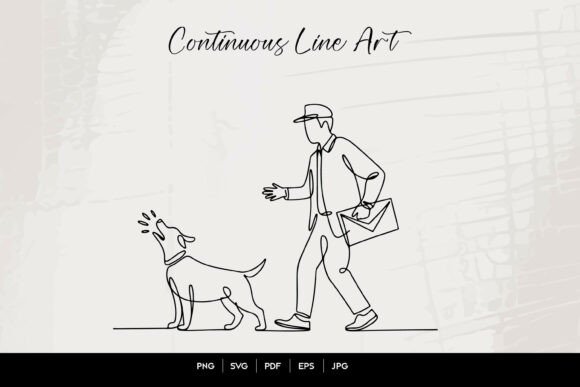
The first time I opened this design, I didn’t just see a mailman and a dog. I saw a story. A continuous line drawing has a way of feeling both spontaneous and deliberate, and this one captures that classic moment of a postal carrier being greeted by an enthusiastic, barking pup. The single-line flow gives the whole scene a playful energy that’s perfect for embroidery projects where you want character without too much density. As someone who has stitched hundreds of designs and sold finished goods to customers who appreciate a good narrative, I immediately started thinking about where this would land best in a real product lineup.
A Design That Pulls You In
The mood is light, humorous, and instantly recognizable. Anyone who has ever seen a dog rush to the door when the mail arrives will smile. The mailman’s posture is steady, the dog’s stance suggests motion, and the unbroken line makes the whole composition feel like a single confident pen stroke. That kind of visual personality works well on products meant to spark conversation or add a personal touch. I could see it on a tote bag for a mail carrier, a sweatshirt for a dog lover, or even a small patch for a jacket. The theme fits the crafts category naturally because it’s a design that invites personalization and storytelling.
How It Behaves in Stitching
Line art of this type relies mostly on running stitch or a very thin satin stitch to mirror the original drawing. The stitch density should be kept low to preserve the hand-drawn feel. I would test it on a medium-weight cotton or linen first, using a 4‑inch hoop to see how the continuous line tracks. The beauty of a single line is that it can be quite forgiving—there are no large fill areas to pucker, and the thread path can be adjusted in your digitizing software to keep starts and stops minimal. That said, because the product description lists SVG, PNG, EPS, PDF, and JPG files rather than native embroidery formats like DST or PES, you will need to digitize the design yourself or have it converted. This is a graphics asset meant for creative use, not a direct machine file. For an experienced designer, that’s a chance to control stitch quality. For a beginner, it’s worth noting that you’ll need a digitizing service or software before you can stitch it.
Real Project Thinking: A Custom Embroidered Tote Bag
Let me walk you through a scenario I recently worked through. A customer wanted a personalized gift for her brother, a mail carrier who also has a Jack Russell that barks at every delivery van. I decided to embroider this mailman and barking dog line art onto a heavy cotton tote bag. The single line style fit the tote’s casual look perfectly. I used a light beige thread on a dark navy bag to make the line pop. The continuous flow of the design meant I could place it off-center near the top of the bag, leaving room for a name or initial. The customer loved that it wasn’t overly cutesy—it felt more like a hand-drawn sketch than a cartoon. That honest, artful quality is exactly what handmade product buyers respond to. It elevates a simple tote into something worth keeping and talking about.
Where This Design Shines in Your Product Line
After testing the concept on several fabric types, I can confidently recommend Mailman and Barking Dog Line Art for a range of finished products:
- Custom apparel: Sweatshirts, t-shirts, and denim jackets. On a chest or sleeve, the line becomes a subtle conversation starter.
- Embroidered patches: Stitch it onto twill or felt, cut close to the line, and add an iron-on backing. Patches are easy to sell and quick to produce.
- Home decor: Pillow covers and tea towels. The narrative quality makes it ideal for kitchen or porch accents.
- Holiday and humor gifts: Think “national mail carrier day,” retirement gifts, or a funny present for a dog-owning friend.
- Boutique and small shop merchandise: Use it on aprons, caps, or even baby rompers if the design is scaled appropriately (though the dog and mailman theme might lean older).
- Digital product previews: The PNG and JPG are clean for mockups on your Etsy shop or craft fair displays.
Where to Use It with Extra Care
No design works everywhere, and this one has a few boundaries worth respecting:
- Small hoop sizes: If you squeeze the entire design into a 4x4 hoop, the continuous line may become too fine and lose visual impact. Test at your intended scale.
- Stretchy fabrics: Jersey knits and ribbed cuffs can distort the line. Use a stable cut‑away stabilizer and consider a light weight iron‑on interfacing on the back.
- Dark or printed fabrics: The single line can disappear if thread contrast is low. I recommend a bright thread color—white, yellow, or a soft pastel—on dark grounds.
- Curved surfaces like caps: The full mailman and dog composition might wrap awkwardly on a structured cap front. A smaller, simplified version or placing it on a flat area (like a cap side panel) works better.
- High‑density stitch areas: This design naturally avoids heavy fill, but if you digitize it with too many tie‑offs or small jumps, the clarity suffers. Keep it clean.
Visual Impact and Buyer Trust
When a customer sees a product featuring this design, they register it as thoughtful and unique. The continuous line technique signals that the piece was made with intention, not mass‑produced from a generic clip‑art set. That perception adds real value to your handmade product. I’ve found that designs with a clear story—like mailman meets barking dog—tend to attract more engagement in listings and at craft fairs. People stop, point, and say, “That’s exactly what my dog does.” That moment of recognition builds trust and makes the sale easier. For Etsy sellers and small business owners, that emotional connection is gold. It also reinforces brand consistency if you offer a series of line‑art lifestyle scenes.
Practical Notes from the Digitizing Table
Before you commit thread to fabric, here are a few steps I always run through when evaluating a design like this:
- Test on scrap fabric first. Use the same material you plan to use for the final product. Check how the line width, stitch length, and direction behave.
- Review thread color contrast. Lay a printout of the design against your fabric. If the line blurs, choose a more contrasting thread.
- Check your digitizing settings. Since you’re working from an SVG or PDF, the digitizer will need to set a uniform stitch path. Ask for minimal trims to keep the flow intact.
- Inspect small details. The dog’s head and the mailman’s hat are key features. If the design is scaled too small, those shapes can become unrecognizable blobs. Adjust size accordingly.
- Compare black and white mockups. I always print the design on paper at the intended embroidery size, then place it on different fabrics. It helps spot scale issues before stitching.
- Use proper stabilizer. A medium cut‑away stabilizer works for most woven and knit fabrics. For very lightweight fabrics like silk or thin cotton, add a tear‑away on top.
- Confirm licensing. The product description lists graphics files, so check the seller’s commercial use policy before selling finished items or re‑selling digital assets. Some designers allow commercial use of stitched products but restrict digital redistribution.
Final Readiness for Your Shop
Mailman and Barking Dog Line Art sits squarely in the sweet spot of whimsical but practical. It’s not so detailed that it demands a large hoop, yet it’s not so simple that it feels generic. The continuous line style remains trendy in both embroidery and graphic design, so your finished products will feel current. Whether you’re making a one‑off personalized gift or adding a new design to your Etsy lineup, this piece gives you a flexible story to work with. Just remember that you’re starting with a graphics file—not an embroidery file—so factor in the digitizing step. With a little planning, that mailman and his barking companion can become one of your most engaging products.