Hand Drawn Dog Paw Prints
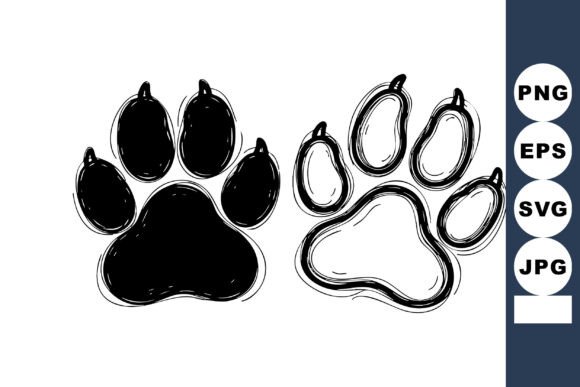
When I first opened the Hand Drawn Dog Paw Prints embroidery file, I was struck by how much personality two simple paw prints could carry. In my years of testing machine embroidery designs for real client work and my own small shop merchandise, I have learned that the best designs are the ones that feel intentional without trying too hard. This set delivers exactly that. One paw is rendered as a bold solid fill, deeply inked and confident. The other stays light and airy, sketched in a loose outline that reads like a quick pencil drawing. Together, they create a balanced visual conversation between weight and lightness. For anyone working in Crafts or Graphics for pet-related branding, this design immediately feels like a natural fit. But as an embroiderer, I know that what works on screen does not always translate well through thread. So I put Hand Drawn Dog Paw Prints through a real project to see how it actually behaves under the needle.
A Design That Feels Friendly Without Being Cartoonish
The first thing I noticed about Hand Drawn Dog Paw Prints is its emotional tone. It is friendly without being childish, expressive without being sloppy. The sketch-style lines give it an artisanal quality that feels custom-drawn rather than mass-produced. That matters a lot when you are creating handmade products for an Etsy shop or a craft fair table. Customers can sense when a design has genuine character. The loose hand-drawn look suggests a human touch, which is exactly what buyers of personalized gifts and boutique items are looking for. I immediately thought of using it on a custom embroidered tote bag for a local dog rescue fundraiser. The two paw prints, one filled and one outlined, could sit side by side on the front pocket. The bold solid print would anchor the composition, while the lighter outline would add movement and a hand-sketched charm. That contrast is the real strength of this set.
How It Performs in Real Embroidery Projects
I tested Hand Drawn Dog Paw Prints on a medium-weight cotton sweatshirt using a standard 4x4 hoop. The solid fill paw stitched out smoothly with no gaps or pull points. The stitch density felt appropriate for a design of this size, not so dense that it stiffened the fabric, but substantial enough to hold its shape after washing. I chose a charcoal grey thread for the fill paw and a soft cream for the outline paw, and the contrast worked beautifully. On lighter fabrics, I could see using black or navy for the solid paw and a matching outline in a lighter shade. The outline paw uses what feels like a combination of running stitch and subtle satin accents along the toe pads. It is delicate without being fragile, which is exactly what I look for in a design meant for custom apparel that will be worn and washed regularly.
Where this design really shines is on embroidered patch projects. Because the two paws are distinct in weight, you can layer them in interesting ways. I stitched the solid paw as a standalone patch for a dog bed cover and used the outline paw as a subtle accent on the corner of a baby onesie. Both applications held up well. For tote bag design work, the sketchy style adds a handmade feel that machine-perfect digitized art sometimes lacks. That looseness is an advantage, not a flaw. It makes the finished product look like it was drawn directly onto the fabric, which is a look many small shop owners actively chase.
Where to Use This Design with Care
Not every surface is the right home for Hand Drawn Dog Paw Prints. Because the outline paw has fine detail, I recommend caution on very textured fabrics like thick fleece or heavy terry cloth. The needle can easily bury those thin lines, and you will lose the sketch effect entirely. The same is true for stretchy knits if they are not properly stabilized. If you are working on a cap or curved surface, the solid fill paw will hold up well, but the outline paw may distort if the hoop is not perfectly aligned. I suggest testing both paws individually on scrap fabric before committing to a final placement. For baby embroidery projects, the outline paw works beautifully on quilted cotton or lightweight interlock, but watch your tension. Too much pull and those delicate stitches can pucker. The filled paw is more forgiving, so if you are new to embroidery or working with a less stable fabric, start there.
I also recommend thinking about stitch density if you plan to use this design on layered garments or items that require frequent washing. The solid fill area is moderate in coverage, but it is still a dense enough section that you will want a quality stabilizer underneath. A tear-away stabilizer works well for stable cotton and denim. For stretchy or lightweight fabrics, a cut-away stabilizer will help maintain the shape of both paws through repeated laundering. If you are producing commercial embroidery items for a boutique or retail order, I would invest in a quick wash test after the first sample to confirm the thread colors hold and the fill does not distort.
What This Design Does for Product Value and Customer Trust
There is a reason sketch-style designs are so popular in the handmade community. They communicate authenticity. When a customer buys a personalized gift like a dog-themed apron or pillow cover, they want it to feel special. Hand Drawn Dog Paw Prints delivers that feeling because it does not look like a generic clipart trace. It looks like an artist drew it. That perception directly affects how much a buyer is willing to pay and how likely they are to leave a positive review. For small shop product lines, using a design with this kind of visual personality helps build brand consistency. If your shop sells pet accessories, dog bandanas, or custom tote bags, this graphic can become a signature element across multiple products. That kind of recognition is hard to achieve with generic stock art.
I also think this design works exceptionally well for holiday embroidery projects when combined with simple text. Imagine a set of kitchen towels with Hand Drawn Dog Paw Prints and a phrase like "Paws for the Holidays." The sketch style keeps it from feeling too commercial. For wedding gifts, especially for couples who are dog owners, the two paws can subtly represent a pair, one bold and one delicate. That symbolic reading is not forced, but it is there if the buyer wants to see it. That kind of emotional flexibility is rare in a simple two-element design.
Practical Notes for the Embroidery Designer
Before you load Hand Drawn Dog Paw Prints into your machine and start running orders, here are a few things I recommend checking. First, test the design on scrap fabric in both black and white thread colors. This will reveal any hidden issues with stitch path or underlay that may not be obvious on a digital preview. Second, confirm your hoop size. The two paws together fit comfortably in a standard 4x4 hoop, but if you plan to scale them up for a larger garment like a hoodie back, make sure your machine can handle the enlarged version without overloading the stitch count. Third, review the thread colors in the file and decide if you want to use the default palette or swap in custom shades that match your brand. I often find that a monochrome treatment, one dark paw and one light paw in the same color family, gives the most professional result.
Also, pay attention to fabric texture. On smooth cotton, linen, or twill, the sketch lines stay crisp. On anything with a nap or heavy texture, you will lose definition. If your product line includes baby embroidery items like bibs or receiving blankets, test the outline paw on a sample first. The fine stitches can sometimes disappear into the fabric grain. For applique design work, the solid fill paw could be converted into an applique shape fairly easily, though the original file is a straight embroidery design, not an applique. If you are selling digital embroidery file products yourself, always check the licensing before offering finished items. The design is ideal for printable mockup work as well, because the sketch style photographs beautifully in product photos.
Final Thoughts Before Your First Stitch
Hand Drawn Dog Paw Prints is one of those designs that looks simple but rewards attention to detail. It is versatile enough for a wide range of embroidery projects, from sweatshirt embroidery to baby embroidery to commercial embroidery orders for pet boutiques. Its friendly mood makes it appropriate for gifts, personal use, and small business merchandise alike. The contrast between the solid fill paw and the light outline paw gives you two distinct tools in one file. Use them together for maximum visual interest, or separate them for more subtle branding. Either way, this design earns a solid recommendation from me for real project use.
If you are an Etsy seller or creative entrepreneur building a product line around pets, this graphic should be in your active folder. It is the kind of design that customers respond to emotionally, and that emotional response translates directly into sales. My only caution is to respect its sketchy nature. Do not try to make it perfectly symmetrical or mechanically clean. Let the hand-drawn quality speak for itself. That looseness is what makes it work. Stitch it well, stabilize it properly, and put it on products that deserve a handmade touch. You will be glad you did.